Thursday, August 16, 2007

Reprints as profitable?!

I'd love to work with paperback reprints, finding lost treasures and bringing them back to life. But with used bookstores and used copies of books so easy to find online, not to mention that nasty programs at B&N wherein they publish cheap paperbacks of public-domain classics and then display them prominently in their stores, I just don't see how it could work well. But sometimes, you see it done well, and you realize it can happen.

I've always admired the titles published by the New York Review of Books, both in terms of the ones they pick to bring and in terms of their aesthetic. They're identifiable, and really nicely designed. I also have long been a fan of David Godine's reissues from the Black Sparrow backlist, which he acquired a few years ago.

So Publisher's Lunch today featured a link to a Wall Street Journal article about this phenomenon. Now because the WSJ often has content online that is not available to the public, I'm copying and pasting the whole thing. This also allows me to give the writer credit, but I still feel like I'm stealing.

Anyhow, here it is:

THE WEEKEND ADVISER
Big Sellers, Decades Later
By ROBERT J. HUGHESAugust
10, 2007; Page W2
Sometimes the second time's the charm in publishing. Two publishers -- Persephone Books and New York Review Books -- are finding unlikely success in the overcrowded book industry by turning out reprints of decades-old titles. Some are even getting noticed by Hollywood.

Author Kate Christensen discusses her new novel about a dead painter and the women who loved him. New York Review Books, an offshoot of the literary magazine, has published more than 200 adult and 30 children's titles, most of them reprints. Out next week from the Manhattan publisher is "Novels in Three Lines" by a turn-of-the-century Parisian anarchist, Félix Fénéon. The book is a collection of short, sometimes epigrammatic lines about incidents from life, which appeared in the French newspaper Le Matin in 1906.

The new volume is translated by Luc Sante, a New York Review of Books contributor whose own works include "Low Life," a study of New York's underclass.

Persephone specializes in novels by women. Among the London company's most popular releases is 1938's "Miss Pettigrew Lives for a Day" by Winifred Watson, about a governess sent by an employment agency to the wrong address, where she finds a glamorous nightclub singer and helps her through misadventures. The reprint has sold 22,000 copies -- exceeding the sales of many well-received new novels today. And "Miss Pettigrew" has spurred a film adaptation starring Frances McDormand set to come out next year.

Some publishers find hits reprinting books from years ago. New Persephone titles this summer include Frances Hodgson Burnett's "The Shuttle" from 1907, about American heiresses marrying English aristocrats. Its books are sold through Persephone's Web site and Amazon.com. Next year, it plans to sell a few titles through U.S. bookstores.

Reprint publishers aren't under the same pressure to create instant hits as are publishers of new material, says NYRB publisher Rea Hederman. His books often take a year to gather momentum compared with the month or two that bookstores give a new title before they pull it from shelves. When NYRB last October released "A Savage War of Peace," about France's occupation of Algeria, it didn't take off at first. But what some people see as parallels to Iraq in the 1977 book have since turned it into a hit with American armed services. The title has sold more than 20,000 copies.

Some NYRB books also have attracted filmmakers. Darcy O'Brien's 1978 "A Way of Life Like Any Other," about the son of a fading star, was optioned by Ben Stiller's company. And "Dud Avocado," a 1958 comic novel about Hollywood by Elaine Dundy, is being developed into a film by producer Sara Risher, who is working with longtime rights holder Twentieth Century Fox. "The re-release made me realize it was timeless," Ms. Risher says.

Some independent booksellers embrace NYRB's list. Nancy Olson, owner of Quail Ridge Books & Music in Raleigh, N.C., says her staff recommends John Williams's "Stoner" from 1965, about a farmer who becomes a college professor, and has sold 60 copies so far. "They're not the kind of titles you'll see pushed in big commercial bookstores," she says.

Tuesday, August 14, 2007

Borders = Kind Boss/Parents to their Employee/Children

In an official press release, Borders Inc. has announced a contest for employees to get their manuscripts published, "under the company's exclusive and proprietary publishing program." First Barnes & Nobles and now Borders, publishing their own books. Now that is a huge pet peeve.

According to the release, the contest is for fiction writers who also work at Borders, and who now have until January 2008 to submit their work. A rather ominous sounding "panel of judges at the corporate office" will decide on the winner, who "will be awarded a book deal including the full support of Borders merchandising and marketing arsenal." It may just be a War on Literacy!

Now in all fairness, is there anything wrong with the contest? Maybe not, but I think many of us feel the slime when reading this. Total corporate parent vibe, no? Oh, you're unconvinced. Well try this on for size:
"Our employees are talented and creative individuals who have atremendous passion for books, and we believe that there are many who alsohave undiscovered writing talent," said Rob Gruen, executive vice president, merchandising and marketing for Borders Group, Inc. "We are excited to discover new authors within
our company and to promote their novels to the millions of loyal customers who rely on our recommendations.We have such confidence in the talents of our staff that we are anticipating multiple winners and hope to publish fictional works ranging from mysteries and thrillers to romance and historical novels."
There goes that pop-tart I just ate.

And will this VP of MARKETING and MERCHANDISING be on the judging panel? I'm guessing so. You know what role that fulfills in the tired old traditional book publishing model? The editorial role, and this guy is a marketing guy. Another pet peeve - running a company whose editorial vision is based 100% in what-might-sell. Good luck.

And, I hate to sound like a broken record here, but I worked at a Borders once and watched as a customer came in looking for a bestselling book, and the employee - an assistant manager, in fact - had to go to the computer to search, even though there were probably 3 dozen copies at the front of the store. That location, as far as I could tell, included one employee who could sustain their attention long enough to finish a book and, fortunately, he was the store manager. Now those same colleagues could be penning the next big release from Borders Publishers, or whatever crap name they've chosen.

Well good luck, Borders employees. I have no doubt that there is some real talent working in Borders stores, amongst those 30,000 employees. I do have doubts about Borders going through with it, and I can't imagine how they'll treat an employee who may have been slaving away at a store part-time with crap wages and no benefits, who is suddenly their product to push. It's surreal. It may even be post-modern, but I'd have to check some theory books on that to confirm.

For better, and more interesting and pithy and bitchy reactions, please consult the Comments section of this Gawker piece on the contest. My favorite title suggestion is "The Five People I Just Met in The Restroom," suggested by Bertyapple. Or "Biscotti, manhood and other things you keep in a jar," suggested by Vandusen. Well done!

Friday, August 10, 2007

Hype for hype's sake

I know we all love a good celebrity biography. I've read a few myself, if I'm going to be entirely honest. And we publishing types also like to read about and talk about buzzy books, big projects promised to be the next big thing. In my position, I don't get involved in auctions for such big projects, but it's of interest all the same.

And, I should add, I love me some pop culture - I'm an Entertainment Weekly subscriber, and have even been amused by Tyler Durden's blog, though the rampant homophobia, sexism, and racism has made me stop reading it. I never read the comments, but when I looked at them once, it was like bad lockerroom talk and then some. (Gross. Go for fugging instead.)

Anyhow, my point is that I still, despite all of this, I still don't get the hype over late comedian Chris Farley's bio. I mean, really?

To summarize the article linked above, agent Peter McGuigan got rights for the biography of Chris Farley. Yes, the overweight comedian who starred in such classics as "Tommy Boy" - which I admittedly think is hi-larious - "Black Sheep," and of course, a few seasons of "Saturday Night Live," and who died of a drug overdose in 1997, at the age of 33 I believe. Tragic.

The book will be written by the late comedian's brother, Thomas Farley, along with Tanner Colby, as "an oral history." And get this, Wendy Wolf at Viking bought it from McGuigan, for a deal that amounted to "substantial six figures." The publishing world has officially lost me.

I can get why the original publisher, the now defunct Rugged Land (or is it defunct?), planned to publish this book this year, 10 years after his death. And I could understand Pocket Books doing something, or the Virgin book publishing arm, which I think is still getting its bearings in the US.

The schizophrenia of some of these big houses continues. One publisher where you can find this bio and J. M. Coetzee, a very literary novelist whom I enjoy, on the same list. So why should I trust that name, Viking, when I see it on a spine...

Tuesday, August 07, 2007

Margaret Spellings is not a good reader

Well Alberto Gonzales is an unethical lawyer and and Michael Chernoff is a horrendous administrator and Dick Cheney is just an evil human being, so I should not be surprised that Bush's Education Secretary is just a bad reader. She was the summer reader on NPR, and the piece featuring her summer reading was included in the NPR Books podcast I listened to on the way to work this morning.

She lurvvvved Eat Pray Love, unsurprisingly - and that's fine. But repeatedly referring to books as "entertaining" seemed a bit daft to me. I grew suspicious, I must admit, when she not only mentioned how excited she was to start Khaled Hosseini's A Thousand Splendid Suns, but also said she was chatting with the First Lady about it. I guess Senorita Bush loved it. Hm. "It's about women in Afghanistan, you know," she said, very knowledgeably... actually, in a tone that resembled someone dimwitted trying to impress a colleague.

I know it's easy to romanticize the past, but remember that photograph, possibly from Life Magazine, of Jacqueline Kennedy on the campaign trail, in a plane, reading On the Road? I'm ready to have two smart people occupying the White House again.... two smart readers with smart readers in the Administration who do NOT say, as Spellings did, that given all the time in the world to read any book, they'd read the Harry Potter books. Are you f'ing serious?!!?!?! I'm all for the books, but surely you don't need all the time in the world to read 7 kids books, lady.

Egads, right?

Tuesday, July 31, 2007

Complaints from within

Peter Osnos, founder of PublicAffairs and general publishing gadfly, has written this piece for The Century Foundation, where he is a Fellow. The headline is "Harry Potter and the Rest of the Book Business." How provocative.

In fact, it's just a rant about him not being able to get a book that he read about, and then it becomes criticism about the limitations of modern publishers who cannot fulfill potential customers' desires by having enough copies of books available. HP7 was the exception, hence the headline. I can appreciate what he's saying but this seems a bit cheap and easy. He is taking off his Publisher hat and putting on his Customer and announcing loudly, "I'm ALWAYS right! That's the expression!"

I guess I clam up anytime someone pushes for publishers to chase customers this hard, even if I understand that publishers cannot just rest on their laurels and expect readers to come to them. It's a new age. But can't he see, as a Publisher, that it's not always beneficial financially to print more copies? In this case the book got amazing publicity which translated into demand. First of all, what if that publicity didn't pan out? A lot of media is unreliable like that. And secondly, I'm here to tell you that not all publicity generates sales. You can get great publicity and not sell many books, so printing 30k because the Washington Post is a sure thing is not always the best idea, especially for a smaller house with more limited resources.

And how did he manage to write this li'l article without criticizing the chains at all for their buying? In fact, it becomes a celebration, this article, or rather a commercial - for Amazon. But if B&N and/or Borders shuts out a book for whatever reason, the publisher can produce 8 million copies of a book and it doesn't mean it will necessarily be easy to buy.

I just think he should have sat on this for one more day, perhaps, and widened his critique.

Sunday, July 29, 2007

Booksellers in the past or in the future?

Stolen from the great blog Book Patrol, this interesting video on a street bookseller in India. Pretty incredible stuff that makes you question, on a quite fundamental level, the importance of books and their manner of distribution.


My first time to embed a video, so advance apologies for any technological difficulties...

Tuesday, July 24, 2007

Yet another reason to love Harry, I suppose

From one of my favorite sites, Grist, which does snarky environmental news (and does it exceedlingly well), comes this exciting information:
Welcome Back, Potter
Final Harry Potter tome is "greenest book in publishing history"Hear that? It's the satisfied sigh of millions of Harry Potter fans who finally have the long-awaited seventh book tightly in their grasp. The final installment of the mugglicious series is said to be the greenest book in publishing history -- a good thing, since it's set sales records at retailers like Amazon.com and Barnes & Noble. Sixteen publishers around the world used eco-friendly paper for the edition, including U.S. publisher Scholastic, which went the conventional route for the last Harry book and faced a boycott as a result. In all, says Markets Initiative, a Vancouver-based group that helps publishers go green, the switch for Harry Potter and the Deathly Hallows has saved nearly 200,000 trees and avoided almost 8,700 tons of carbon dioxide emissions. Which totally makes up for the fact that Harry dies in the end. Or does he?

I guess this is, in fact, rather old news, as they first posted something on it here quite awhile ago, but it's news to me - and good news at that. Their latest article on it is here.

More on green initiatives on a less busy day.

Monday, July 23, 2007

HP7 HP7 HP7

I don't believe any publishing blogger, at least until tomorrow, is allowed to post on anything non-Harry Potter. And to be honest, even though I admittedly have not read past the second book, I have no problem with that. And I'm kind of tired of the people rebelling against it because, quite frankly, it seems like harmless fun to me. Sure, the image of a grown woman dressed as a 14 year old wizard disturbs me, but the only real evil I can find is in places like Walmart capitalizing off this massive interest in reading shown by so many adults and children.

(and yes, I can appreciate the concern that Americans don't get this excited about something more sophisticated - ie, when did adults ever line up like this for a book written at an adult level.)

Moving on, here's the round-up from Shelf-Awareness:
Quickly some statistics:Scholastic estimated that 8.3 million copies of the 12 million first printing of Harry Potter and the Deathly Hallows sold in the U.S. on Saturday. By contrast, in 2005, some 6.9 million copies of Harry Potter and the Half-Blood Prince sold on the first day.
The New York Times estimated that if the average price per book was $20, "Americans spent nearly $170 million for the book in one day." The AP (via the Seattle Times) calculated that sales of the book averaged more than 300,000 copies per hour or more than 5,000 a minute.

It goes on to talk numbers from Borders, B&N, Amazon, and yes, Walmart, but I don't feel the need to include just how much richer the shareholders became.

I myself was at the charming Books, Etc. in Portland, Maine, where my partner snapped up a book just after midnight. It was sweet to see the anticipation, and then to hear the applauase and general "horrah!" when midnight struck and the first book was sold. Admittedly, as someone who doesn't do groups, who gets uncomfortable when too many people follow one line of thought, I grew a bit itchy while returning from the cafe car on the train coming back and found no few than four people reading the book in the few rows between where I entered our car and where we were sitting - adults and children alike, and all kinds, from a jockish 13 year old to a middle-aged businessman by himself to a teenage/possibly college-aged woman. I want to celebrate the diversity, but some part of me is envisioning them all looking up, glassy-eyed, and coming at me with arms out like trained, brainwashed killers. I mean, replace HP with the Bible and I'm getting off the train at the next stop.

But NO! I won't be won over. This is a victory for books and for reading and hopefully, for independent bookstores. Says Elisabeth Grant-Gibson, co-owner of Windows a bookshop in Monroe, LA, quote in Shelf-Awareness:
"I swear I think we're reaching the tipping point where people are really starting to value the independents and make a little extra effort to support them. Those people coming in today aren't buying here just because we have the best party (which we do--oh my god, it was fab), but because they are willing to pay and extra $15+ for the book (and the extra tax) to buy with us."
Well done, America!

PS I want to add to this post this interesting article from Jon Healey in the Opinion section of the Los Angeles Times, in which he talks about the early spoilers. He himself does not spoil anything - fear not, fans - except any rebellious notion held by those in support of said spoilers.

He spoke with Rich Pearson of Attributor, a company that researched the spoilers famously posted last week:
The most interesting finding is that the vast majority of the material -- 90% or more -- wasn't being hosted by Potter fan sites. Instead, Pearson said, it was found mainly on splogs that used the traffic to drive up ad revenue. By Attributor's count, about 80% of the web pages with the Potter leaks also had ads. These sites tended to be good at optimizing their pages for search engines, Pearson said, so they would appear near the top of the results when someone searched for "Harry Potter" or "Deathly Hallows." In most cases, the sites simply copied and pasted the same material found on other spoiler sites.
Cultural rebellion by capitalist pigs. I'm all for non-conformity but not when it's powered by those just trying to edge in on bigger profits. People aren't spoiling to fight Scholastic's corporate power.

And it might be worth mentioning that Bloomsbury in UK published HP originally, kicking off this phenomenon, as an independent publisher, and the book's success, in the US at least, is due largely to the work of independent booksellers, when the book was first rather quietly published in the US. The Washington Post's Bob Thompson recently mentioned this, saying, "it's important to remember that the Potter phenomenon started not because of hype but because readers (and independent booksellers) loved the first couple of books."

And here's another good article on Friday nights' events, from Bookselling This Week.

Wednesday, July 18, 2007

Lazy publishing blogger.... Bad publishing blogger...

Buried at work, like so many other editors. Actually, I suppose when many people think of book editors in the summer, they imagine us at our homes on the Vineyard (that's Martha's, for those not in the know) or the Hamptons. They don't picture me dragging my tired behind to an office for long days, 15 minute lunches, and author calls that can go as long as an hour and twenty (though it was an author I like just fine today, for the record).

One distraction I've had, besides work, is Good Reads. Deadly. Very fun, very silly. For the book nerd in all of us.

I've also been trying to get my head around the Houghton Mifflin purchase of Harcourt. Houghton's take on it is here, while Harcourt does not seem to have posted any news of it on their site... unsurprisingly. Something more objective from PW here and the Boston Globe here. But this article on whether it will affect the trade side of both houses is what interested me. The opening was somehow eerie:
When Houghton Mifflin Riverdeep's CEO Tony Lucki said in statement that, “We would like to think that Houghton Mifflin's Henry Wadsworth Longfellow and Harcourt's T.S. Eliot would truly be proud of what we are announcing today," the subtext of the message seemed clear: HM Riverdeep's purchase of Harcourt is good news for literary publishing.
I don't want to look at the man behind the curtain, but that's one bizarre quote.

We shall see. Any thoughts on this acquisition and the future of the trade sides of both presses are most welcome. Should we be shaking in our readerly boots?

Tuesday, July 10, 2007

Ask the buyer what to sell

Via Shelf Awareness, this New Yorker piece by James Surowiecki - which was actually the Financial Page - talks about Simon & Schuster's recent decision to partner with a website called Media Predict. As the website notes, "Via Project Publish, Touchstone Books will be the first major publisher to put our market-based method for evaluating media content to the test." So a group of readers will evaluate book proposals and choose the top 50, which will then be evaluated by "a team of editors," with the finalist, naturally, being published.

There is a recent history to this phenomenon, with the failed experiment known as the Sobol Award. (See Miss Snark's smart response to this scam.) It was similar in that it created a contest to get yourself published, but it also offered cash prizes. Oh, and it charged participants $85 each, which is what really set people like literary agent Snark off. Rightly so! As the Award's website explains, they didn't generate enough interest to pull it off.

But this deal between S&S and Media Predict is different. I don't believe they are charging money for entries, and they are relying on readers to pick the winner, causing some critics to refer to "American Idol." It's another kind of good ol' fashioned market research, right? Right. But I guess some of us snooty types like to think of books as being above the market, about more than just a product. This is something I've returned to repeatedly on this blog, as I worry that the more we view books purely as product, the more the book as we know it becomes endangered. Survival... endangered... it all comes together.

University presses work in this way, to some extent, from what I've seen and heard. The editors talk to professors and read publications related to the disciplines they publish into, and they try to jump on the trends and publish books professors want to use in courses. But this system allows for more opportunities of originality, it seems. You and I might not be able to always understand an academic book, but many of them are cutting edge, fascinating, very necessary polemics that present an idea or topic that will likely get a tradier treatment years down the road. Textbooks are a bit more led by market research, whereas university press editors get to work with scholars on keeping up with an intellectual discussion - and I say that knowing some might replace "discussion" with "market," which again is just base.

As someone who doesn't own, I imagine that when people move into a neighborhood, they choose it because it has character. Many of them then, once they become owners, work tirelessly to remove any sign of character for fear of hurting the elusive "market." It's all about resale value. I find this tragic, yes, but on a lighter note, truly bizarre. You cannot live in your home, in the space in which you spend very important down time, in fear of the market! Relax, express yourself in that space, spread own and make yourself comfortable. The activities you choose shouldn't harm your neighbors, of course, but they should express your own individuality rather than your ability to follow the status quo. "I assume you'll be putting in GRANITE countertops, William... no?"

So then we get to publishing - on the other end of the profit spectrum from real estate, to be sure. As the New Yorker piece points out, in all it's stark sadness, "most books today are not economically successful, which means that much of the time and money that publishers invest in projects is wasted." Youch. So I want to say publishers need to have a firm identity, and need to stand by that identity and make it consistent, a vision that will attract people and keep people around who will come to rely on the vision of the editor or editorial team. Some good examples of this kind of publishing include McSweeneys - and go buy a book there, as I certainly did, as they're hurting from PGW's bankruptcy! - and David Godine. These places have a secure, strong identity which does not always point so directly to the market.

But I know that's idealistic. Still, do we need to sound as desperate as S&S here, begging readers to just tell us what to publish? I hope not.

Thursday, June 28, 2007

From over the pond

Do people even use that "pond" expression anymore? I've always hated it. And I'm using it. I blame the heat - my brain isn't functioning properly.

On that note, I'll keep it to a link and very little commentary. Via Shelf Awareness, here's a link to a story from the Herald in the UK, by Karin Goodwin, wondering if book clubs like Oprah or, in the UK's case, Richard and Judy, are hurting publishing. This is a bit like the Franzen debate that happened a few years ago, no?

This detail though is one of those things that doesn't entirely translate, even sounding completely nuts:
Each month, the supermarket's book club will select a book released by its partner, publisher Random House, and offer notes and reviews in the Tesco magazine and on its website. Tesco aims to make choosing a book as easy as grabbing a tin of beans or a pint of milk. Its initial choices sound interesting and intelligent. Alison Weir's Innocent Traitor, a historical novel about Lady Jane Grey, will kick off proceedings and Scottish novelist Kate Atkinson's One Good Turn will follow.
Yes, the grocery store is selling Random House books, selecting them for the busy shopper. This is making all of us wee idealists a bit uncomfortable as the whole book-as-product becomes a little too, ya know, real.

The article talks about this fear: "Publishers can no longer afford to take chances and authors who have enjoyed modest successes over many years are suddenly being dropped in favour of potential big hitters." I'm not convinced book clubs are entirely to blame for this phenomenon. Books are just further proof, like the whole electricity deregulation in Texas, that the competitive market creating better options is a myth. Everyone's striving for mundanity... not a word, is it? You get my point. Politics proves this every election. The more milque-toast, the wider your base. So of course big publishers do this, but book clubs are just kind of a funneling of the readership. Admittedly, they block that readership off even more, as some stray sheep might actually buy a different milque-toast book without them, but at some point, we may just be splitting hairs.

I think Mark Lambert of the Scottish Book Trust, quoted in the article, has it right when he says it's not the book clubs that are the problem, necessarily, as much as the supermarkets getting in on the market there. We have the bookstore chains to contend with here, but I don't think Wal-mart et al have really made a dent in the book market. I could be wrong, but it seems their book sections are weak. But if book clubs prompt people to go into an independent bookstore and buy the selection? I ain't mad.

Which goes back to an earlier post about Oprah not encouraging people to go to an indy for her books....

Monday, June 25, 2007

On used books and consuming in general

I'm kind of sorry to post again so quickly, as I was really pleased that the bookseller in question, Alex Green of Back Pages Books, commented on my earlier post! Feel free to scroll down and comment on that older post, if interested. Or at least read it, people, I mean honestly...

Anyhow, this Short Cuts article from Alina Tugend in the NY Times was interesting, on what to do with your old books. (I should note that I followed a link from the ever-interesting Bookslut to get there.) This is a constant problem of mine, and my partner is actually even worse. It's a meandering piece, but useful. I was particularly interested in Better World Books. Does anyone know anything about these folks? It seems smart and good to me, but is it secretly evil? Am I missing something or not thinking this one through? I'm going to investigate, but I'm very much about less consuming and downsizing right now.

While being into downsizing, I'm also trying to come up with a real ethos. I mean, I don't want to downsize in a way that leads to less support for the arts. I want to buy less clothes, processed foods, general crap, but I shouldn't cut down book-buying (or cds or dvds) necessarily. Right? I should just choose carefully, both what I'm buying and where I'm buying it.

I'm being influenced in part by a recent thought of volunteering with Conscious Consuming, which has a blog here, and by a typically-terrifying Mother Jones article, from the current issue which has not been posted yet, called "No Sex Please, We're Organizing." It talks about how Americans require storage now more than ever, how "7 square feet of commercial storage space now exists for every American," and how "Ashlee Simpson told People a 1,300-square-foot closet was the selling point of her house." Ugh, shoot me now. And on a more human scale, we know many people see a visit to Target or worse to be a nice Saturday afternoon out - many driving their SUVs there and filling them up with useless garbage they don't need.

So I'm trying to determine how to marry these two urges - to read and support a community of writers (and edit a few of them, when I'm lucky) AND to not buy useless crap. I think I can do it, but it's harder than just mindlessly spending and consuming. The good news is, I make hardly any money, like most in publishing, so I'm not exactly working with a lot at the start.

This is where one might insert a winking emoticon, just fyi.

Bookselling not entirely dead in Boston

Have you heard about this 1001 Book Project, sponsored by Back Pages Books, in Waltham, Mass.? The Boston Globe wrote it up, Shelf Awareness mentioned it today in their daily email, and Grub Street had put it in their "Rag" a month or so ago, because the author is one of their own.

This independent bookstore, Back Pages Books, is trying to sell out the first full print run of a new novel by local author Jon Papernick, called Who By Fire, Who By Blood, which is being published by something called Exile Editions (a Canadian publisher of "fine literature"). While it's a rather ambitious endeavor, I like the bookseller's attitude. The Globe article ends thus:

Green hopes the innovative effort will also inspire other independent bookstore owners not to give up in the face of Internet retailers such as Amazon.com.

"We've got absolutely nothing to lose," he said.


(The article has some other interesting publishing notes in it, btw.)

We can only hope more independent booksellers have such strength of conviction and support voices they like. Of course, there's more to it then that, as customers have to agree with the bookseller's opinion...

Booksellers need to team up with independent publishers when possible to get books out there, but if they focus too much on obscure titles by small houses that look or even are self-published, they run the risk of scaring off customers. I can appreciate that. There are enough independent presses, as well as university presses, offering well-produced books that too often get overlooked by mainstream media and big box stores. And it's always nice to see independents get behind those books and turn a book that could easily disappear into a strong seller.

In the mix, a bookseller can include books self-published or published by such small houses that cannot afford to produce their books quite up to bigger house standards (shiny cover, awkward font, amateurish design, etc). That's not for every customer, but it's good to have as an option for the open-minded ones that want to read something that's not as common, maybe before the author becomes the Next Big Thing.

I admire the 1001 Book Project and hope more booksellers take notice and consider what they can do to both support new voices while also supporting their own store. I know it ain't easy for these folks...

Thursday, June 21, 2007

Kill the bookstores, then the books

When I worked at a barnes & noble, I was disconcerted at one point when a manager sat me down and explained how I needed to sell more discount cards. What was particularly troubling, besides this hammering of the frontlines to sell more useless crap to people, was that he explained that books do not hold much in the way of profit for the stores, so they were focusing more on the non-book merchandise - stationery, bookends, book lights, bookmarks... those last three becoming effectively useless once these chains successfully destroy book publishing, of course.

Before you accuse me of being some crying Cassandra, there's this article from Shelf Awareness, reproduced in full because they don't have a link:

Pottery Barnes?: B&N Expanding Home Products

Barnes & Noble is "making a big push in home furnishings," an effort that features an exclusive partnership with designer Jonathan Adler and selling Mitchell Gold furniture, according to the June 18 issue of Home Furnishings News. (For now at least, the full story is not available online.) Bill Miller, B&N's v-p of gift, said that the retailer aims to expand "home business" to 10%-15% of company revenues, up from about 6% today. "Because books [are sold everywhere], we're trying to make a stake in the non-book business," he told HFN.

Among elements of the change:

The Jonathan Adler line of pottery, frames and more will make its debut in September "front and center" in some 500 B&N stores.

The company has begun selling Mitchell Gold leather reading chairs in the seating areas of 10 stores--along with copies of Gold's book, Let's Get Comfortable.

A test of framed art in 18 stores that began last fall and was particularly successful in urban areas is being expanded to 65 more stores this month, including many in the Chicago, Los Angeles and Seattle markets.

The selection of framed art will grow from black-and-white photographs from the Getty archive, National Geographic and Life magazine, among other sources, to artwork and prints, too.

The Botanique "seasonal home décor program with floral, archival images reminiscent of [B&N's] greeting card collection" has passed its test with flying colors, and another seasonal home program will make its debut in the fourth quarter.

B&N is also considering adding or increasing picture frames, mugs, lighting and storage and organization products in many of its stores.


And yes, it's worth repeating the quote from Bill Miller of b&n, echoing my old store manager: "Because books [are sold everywhere], we're trying to make a stake in the non-book business." They are not sold in as many places as they once were, Billy ol' boy, because your evil empire is destroying independents. And why? So you can move on to LOUNGE CHAIRS?!

The world's gone mad.

Tuesday, June 19, 2007

Not a good sign...

I don't want to be in publishing at a smaller press, always looking up at Random House as the sign of the future. I'd like to think smaller, independent presses are sustainable, just as independent bookstores will survive in a community while box stores will eventually get too large and topple like a house of cards.

Having said that, Sara Nelson, in her Publishers Weekly column, talks about all the recent "speed chess" happening at RH (that's outgoing executive editor Daniel Menaker's expression for it). You can look up the details, but her conclusion is obvious and yet worrisome:
At worst, the piling on of new jobs to longtime staffers with already full plates is a form of downsizing; at best, it might be that Random, like most publishers, will soon move its emphasis from the acquiring/editing side of the business to the less sexy but increasingly important distribution and marketing side. Editors and authors will always matter—somebody, after all, has to create all that “content” that will be disseminated in forms perhaps not yet invented—but the focus these days is more on selling direct, on digital “product” and on POD.

This is bad news, folks, but Naomi Klein was talking about this kind of sea change in places like the sneaker industry years ago. More money for marketing, less for development. In this case, however, the authors could lose out more than ever, and of course, so could the readers. Ever wander a B&N looking for a good book, and instead find tons of copies of a few bad ones?

Just want to make sure we're all looking out for this trend...

Sunday, June 17, 2007

You should see their LIBRARY!

Just tonight, I was imagining a world where people valued books like they do property...

Ya see, I'm increasingly frustrated by the value given to property, and by the way it's treated by the media. I ain't dumb, I know that property is more valuable because there is less of it. Basic economics and that. But that does not justify the way newspapers cover this subject in their Real Estate sections.

Witness the Boston Globe, a paper that was once thought of quite highly. Some of us locals really enjoy the regular jabs at the Globe provided by its snarky nephew in this city, The Weekly Dig. Their "Media Farm" column does a fine job skewering Boston's only broadsheet paper. But my point is that the Globe has officially, probably starting years ago, rolled over and played dead at the feet of area realtors. I read yet another mind-sucking, feckless article just today, in the big fat Sunday Real Estate section, that only confirmed this suspicion.

In the article, writer Gail Ravgiala alerts readers to a new development in South Boston that promises to bring some "edge" to this "area in transition." What really strikes me about this, how shall we say... giant pile of guano, is the superlatives, the endless celebration happening in these 6 or so columns. Some examples:

- "The three condo complexes that Utile Inc., a Boston architectural and planning firm where LeBlanc is a principal, helped design along the industrial seam between old South Boston and the new Seaport District are at once strikingly contemporary and comfortably in sync with historic buildings around them."

- "His firm, Turnstone Properties Inc. of Cohasset, teamed up with Robert Linn of Moskow Architects in Boston to create a building that walks the aesthetic fine line of fitting in and making a statement."

- "With their simple shapes and three- and four-story heights, the two modernist, dark gray buildings on the East Second Street end create a low-key link between the residential and industrial zones. The buildings also embrace green design and have state-of-the-art amenities."

- "The buildings are flush with the sidewalk, making them more in keeping with the existing structures than if they had been set back. The facades are dramatic but refined."

And when the fearless reporter starts to question all this wonderful goodness, this li'l development of heaven, she realizes, there's no need!

And how do the neighbors feel about the design?

"The most negative thing I've heard so far," said Neilson, "is, 'It doesn't look like my house.' We didn't want to mimic the past. We are just trying to create honest buildings. We made them neutral, not flashy, but they become significant nonetheless.


Done and done. No fastball by this gal! Consider this story... scooped.

Then you flip to the Ideas section in the paper, which covers books and thoughts and intellectuals and writers and events, etc etc... There is no such love. But then again, can you imagine if people wrote about books in this kind of way, for a major urban paper? No, in fact, as we all know, book review sections are getting cut instead. I don't know that Real Estate sections have such fear of demise. I imagine not.

Again, I know Real Estate provides more opportunity for profit. I can't imagine what the Globe makes whenever it posts its Home of the Week (this week, a nice former church selling to some lucky family for a mere $639k!). At the same time, publishers can't be bothered to buy ads in review sections to keep them alive. I know I've heard the discussion. Does it lead to any sales at all?

And these special sections are different from the front section that has general news. These sections have to earn their keep, appealing to a strong niche with a powerful industry driving it. Will books ever be a powerful industry again? Publishers hope to get "off the page" media mentions, in general interest articles or articles on fashion or education or even real estate, in those busier, more visited pages. It seems everyone wants off the book review pages.

I was with some writers this last week who shall remain nameless - and trust me, that's for the best - and one of them admitted to not reading the New York Review of Books' articles because they're too long. They ARE too long! Anyway, a fairly long conversation ensued about reading reviews, reading the New York Times and their Sunday reviews, and one wonders if things on books - newspaper sections, magazines, even blogs - can survive. Are books alone enough of a subject to keep the general public - not editors, not authors - interested?

Real estate is forever of interest. We're told it's security, it's what you do, it's how you get ahead, and at best, it's a risk that can pay off big. Books hold no such promise, and even worse, some people read books or read about books because they think they should.

In an age of media saturation and wireless networks galore, can something labeled BOOKS - hell, even a store - remain feasible?

And is everyone as freaked out by this thought as I am?

Monday, June 04, 2007

Book Expo

I'd be remiss if I didn't mention Book Expo, which occurred last week and weekend. The New York Times article by Motoko Rich is particularly relevant, as Rich explains that "the battering ram of technology was back" at the Expo, following John Updike's screed last year regarding electronic texts.

Rich also mentions that Chris Anderson, editor of Wired and author of The Long Tail, plans to give his next book away free online, as long as people don't mind navigated past advertisements. This is so friggin' gross. I know magazines do it, and I know I sound elitist, but is this our future?! Can we expect the next generation to download James Baldwin books for free, gleefully, and then read through Go Tell It on the Mountain with ads pushing skincare products and cigarettes mixed in? Gross.

And on another issue, to excerpt at length:

In a pavilion outside the main exhibit hall Jason Epstein, the former editorial director of Random House and the creator of the Anchor Books paperback imprint, and Dane Neller, founders of OnDemandBooks.com, demonstrated their Espresso Book Machine, which can print a small paperback book on site in less than five minutes. “This could replace the entire supply chain that has been in existence since Gutenberg,” Mr. Epstein said.

Chris Morrow, whose parents founded Northshire Bookstore in Manchester Center, Vt., three decades ago, said he would be installing one of the machines. He said he planned to print local histories and Northshire-brand titles from the public domain, like “Middlemarch” or “Moby-Dick.”

“There are lots of challenges in bricks-and-mortar book selling, and I see this as a way of expanding our business,” Mr. Morrow said.

This seems incredibly wasteful to me. Morrow's point is well-made, that he can use it for local titles that are hard to keep in print, is appreciated - possibly because I've been to Northshire Bookstore and it's a great indie store. But the idea of just pumping out classics like Moby-Dick for people seems like it will create a lot of paper stacks for readers who may not lift more than 10 pages. I know, I know, one could say printed books are wasteful, but at least there's some art to them, no?

Ultimately, I think my problem with all this is the lack of community, and I know that's idealistic and naive of me, and I'm also aware that this is the same cry heard by the Future of the Book folks who want to create venues out of books. But I mean something a bit more hardcopy, if you will. Bragging that you're going to publish your book online for free with ads - that's just cold, hard capitalism. It's me the author giving it to you the reader - wink wink, we don't need these guys (ie publishers, booksellers), they're just driving up the price - with the nasty corporate hand as ads all through the text, mixed in as if it's okay because the reader can just flip the page. We need to see that such a system is not FREE! You as a consumer are paying when you have to look at ads.

And I don't know what to say about this Espresso Book Machine, which admittedly I would like to see in action. In some ways, it's similar to Caravan, which is more about downloading text (and audio) onto handheld devices. Caravan is just launching now at, I believe, select Borders and some indie stores. Public domain books are an important part of publishing, and as an editor I have looked to see if there are such books that I could bring out in a new edition, to make the house some money. That's damn near impossible at this point in time due to the many publishers with the same idea (and more money) and places like B&N doing their own editions, which I still maintain should be illegal, as a kind of monopoly. Look at the placement those stands get in the stores! Anyhow, this Espresso machine will add to the impractical nature of publishing public domain books, and to me that's a bit sad as publishers can do nice things with classics that this photocopier will not be able to do. Again, the sense of community, with publishers and new introducers and booksellers, is gone as the public domain product becomes a stack of paper to artlessly create.

There is community in knowing you have bought a book that others have, in that edition. We recognize the cover when others are reading it, or note that some editions are different. We like this edition of Ulysses over that one, we find that classic look of Cather in the Rye charming, we get annoyed when they slap a movie cover on a great book to promote the new film version starring Ewan MacGregor (it's always him, isn't it?).

But yeah, maybe I'm being too idealistic and naive. Maybe we should all go print on demand.

It's news but not news

Lissa Warren of Da Capo Press and Da Capo Lifelong Books has posted this article on the Huffington Post regarding the loss of book review sections. (As a sidenote, Da Capo needs to work on that website, it's a real snore.) Her point is that the hysteria around book review sections dying may make it seem like a new problem, but it's an old problem, but still a problem. No seriously, that's about it.

It doesn't make any leaps or bounds toward an answer, but it's good to keep the discussion in play. My partner and I got into a discussion about whether people are still reading, and I guess they are. From a publishing point of view, in terms of reading industry publications, one might think they're not, but that view is skewed by the big box stores that are never satisfied with their profits - they have shareholders to keep happy! they need growth! - and the justified grumpiness of some indie booksellers and librarians. But anecdotally, I think people are still reading.

Now people are clearly watching tv less and using the internet more, and this is creating a different kind of literacy. So the question becomes, what will this do for books and how should publishers prepare? Many suggest going wiki - including my friend from the ever-interesting University of Minnesota Press who, as galleycat reports, is doing a fun new wiki page for a new book called OurSpace. I was starting to see the way in looking at this page, but I still have reservations for this trend generally. And I'm not entirely on board with the Microsoft Reader gadgets just yet, though I know they're improving every year.

I'm still trying to figure out how to best play this heady mix of big box evil, online marketing, big tail theories, etc... Any suggestions are much appreciated.

Tuesday, May 29, 2007

If you don't buy 'em, we burn 'em

Via Shelf Awareness, an amazing story out of the state full of curious incidences... okay, I hesitate. In the spirit of full disclosure, I should confess to being from Texas, and with the whole "glass houses" thing, I should watch myself.

Anyhow, I mean Kansas, and this story by AP writer David Twiddy about a used bookstore owner there who is using his stock to create a "funeral pyre for thought in America today." The article reports, "he envisions monthly bonfires until his supply — estimated at 20,000 books — is exhausted."

[Edit: Please note that it has been brought to my attention that the story is in Kansas City, Missouri - a point that must annoy folks from that fine city constantly. Thank you to Prof. Hex for correcting this silly mistake on my part!]

And a quick note from the article: the customers came running before the bonfire, grabbing stacks of books for as low as $10. I'm all for a clearance sale, but it is hilarious that the books have to be this cheap, and the bookseller this desperate, to bring people out. Is this the new bar? Holding the books hostage and threatening to burn them unless bought?

I'm sure every book blogger will be linking to this today. It's obscene, bizarre, shocking, sensational, tragic, and frustrating. Some folks see the bookseller, Tom Wayne of Prospero's Books in Kansas City, as a hero (and follow that link to see his take on the burning). He's making a point. Written thought has become disposable, and Americans no longer value reading books, having books, getting to know books.

I'm still processing this. Because, to be honest, every bibliophile has had the struggle of looking at a book that you no longer want, but that you know is worth nothing. Used bookstores like the wonderful Brattle Book Shop snottily turn up their nose at your tattered copy of some obscure book on Catholic martyrs. So what do you do? I cannot throw away a book, so if I did, or even worse, if I burned a pile.... it would be a dramatic and very difficult act for me to do, with grave meaning.

Interpreted like this, maybe Wayne is a hero, a book-lovin' man driven to extremes. Please please please, though, do not let this become a trend...

Thursday, May 24, 2007

Stockholders revolt!

Now this is kind of terrifying to me, folks.

Galleycat reports that CBS stockholders are unhappy about Jimmy Carter's book, Palestine: Peace not Apartheid. (She is basing her link on a New York Sun piece, but I'm just not linking to them. I've already linked to other gross publications, and maybe even the Sun, but I have to draw a line somewhere.) CBS of course owns the publisher, Simon & Schuster.

So terrifying, yes. That stockholders, led by a woman named Carol Greenwald of the organization Committee for Accuracy in Middle East Reporting (surely there's dirt on THEM - what's their agenda?), are trying to dictate what to publish and how to publish it is just bizarre, but are we surprised? As a subsidiary of a big corporation, you have to take the benefits, such as "synergy" (read: 60 Minutes exclusives), with the nasty.

In fairness, they're taking issue with the fact that the book may be "error-filled," which it very well might be, and yes, that's a huge problem. And this does call into question the publisher's responsibility on fact-checking, which as I understand it has weakened over the years, along with contractual language putting the responsibility back on the author as much as possible. Publishers do need to step up and take more responsibility for the content of their books.

But it also calls to mind my general reaction whenever I flip through a catalog by one of these giant corporate publishers. It's a chore any author who may sign up with one should do. It's schizophrenic at best! HarperCollins, for examples, sends their batch of catalogs, with all their imprints, and my friends, your head spins as you flip. From business books appropriating language of revolution to tawdry novels to high-end literary fiction to books on adorable puppies, it's just a mess, with no mission or over-arching raison d'etre. It's page after page of product, full of whatever might sell. You can imagine a stockholder flipping through, seemingly unaware of this wild range of topics, of books that blatantly argue against each other within the same catalog, and thinking, "Now THIS STUFF will fly off the shelves!"

I'm all for a variety of voices, but this increasing corporatization of publishing leads to a loss in identity for publishers, which in turn weakens the consumer's ability to sort through books. More immediately, it weakens the bookseller's ability to build any trusting relationship based on quality of books over quantity that could move. I know there are economic realities, for booksellers and publishers, but in weakening brands, publishing house names, this corporate culture weakens the book world and will lead more quickly to the movement toward electronic books that are all about the final product and not about the process (editing, production). Soon, what we love about books is gone.

Go crazy stockholders, but the rest of us should see this as a warning. If you *have* stockholders, they'll weaken your list, force you to sell sell sell, and ultimately ruin book culture. That's my dire, dramatic, "why isn't anyone thinking of the CHILDREN!?!?!" moment for the day.

Tuesday, May 22, 2007

Had to add this

I followed a link from Conversational Reading, a blog, to this LA Times piece on online versus in print reviews, by film critic Richard Schickel (who gets points for the name alone). It's contentious and fiesty and very interesting - a worthwhile read, especially for those in the so-called blogosphere.

The most quotable quote comes early on:
Let me put this bluntly, in language even a busy blogger can understand: Criticism — and its humble cousin, reviewing — is not a democratic activity. It is, or should be, an elite enterprise, ideally undertaken by individuals who bring something to the party beyond their hasty, instinctive opinions of a book (or any other cultural object). It is work that requires disciplined taste, historical and theoretical knowledge and a fairly deep sense of the author's (or filmmaker's or painter's) entire body of work, among other qualities.
So you get he point. He's rude, sure, but he's also irritated the many readers and, on the other end, publishers are giving bloggers equal weight to reviewers. I agree with him. As with books and their publishers, we need to trust the source of this information. As he says smartly later in the article regarding why we read critics, "We do not — maybe I ought to make that 'should not' — read to confirm our own prejudices and stupidity. "

He later quotes writer D. J. Waldie, who says that blogging is a form of speech, not of writing. Youch... but fair. As someone blogging right now, I realize the impermanence of these comments. I recognize the short shelf life of this piece. I have made peace with the fact that this most likely will never be archived. It affects my approach, and therefore affects the quality of writing. If a blogger denies that, then there's a problem - and many people are struggling to deny that.

I was following a friend's links to two bloggers, both of whom were writing very personal chronicles of their lives online, who have gotten book deals out of their blogs, and I was kind of horrified. I was willing to read a post now and again, but the fact that they had been told that their lives were interesting enough and important enough, having been blogged about to death, to warrant publishing, having in print for years to come... it seemed tragic.

I suppose that gets at issues of deserving. Does online journaling make one deserving, or is the journal a possible way to work through issues and feelings, possibly to develop writing skills or at least approaches? That's what I think. Then take those developed skills, concentrate, and write something new, and interesting, and worthwhile, and beyond yourself. That's more of what I'd like to see, as that would be more substantative and engaging to me as a reader.

No?

New links, more soon

I have added a link to a new blog by Grub Street, called The Penny Dreadful. Grub Street is a non-profit here in Boston helping writers in any number of useful ways, lead by creative director / novelist Christopher Castellani. He's a good guy and it's a smart, active group, so any local readers and/or writers should check it out.

And I should post about S&S and this contract change, and their rather pitiful claim that print on demand is a legitimate and perfectly acceptable way to keep a book in print and hence in their possession. From Publishers Lunch:

S&S Replies Further To Guild

Simon & Schuster is sending a letter to agents and authors that asserts the "Authors Guild has recently perpetrated serious misinformation" about changes in their contract language and criticizes the Guild for not "having undertaken any effort to have a dialogue." They say that "contrary to the Authors Guild assertion, using technologies like print on demand is not about 'squirreling away' rights, nor does it mean that 'no copies are available to be ordered by traditional bookstores.' Print on demand is simply a means of manufacturing a book, making it widely available to retailers and consumers."

But the publisher concedes that their standard position has changed as previously described--now believing "the current high quality andaccessibility of print on demand titles indicates to us that such minimums [levels of sales activity] are no longer necessary." They do note that "as always, we are willing to have an open and forthright dialogue on this or any other topic."


But commentary on that, perhaps, soon...

Wednesday, May 16, 2007

Maybe I'm just a skeptic

Shelf Awareness had a link to this New York Sun story - and please accept my apologies for linking to this newspaper -about Joshua Ferris' Then We Came to the End. The writer is wondering why the book, despite glowing reviews, didn't become a New York Times bestseller. Must have made for quite a disappointed author. Oh the poor, poor dear...

The writer does mention that: The book's publisher, Little Brown, says it has shipped 50,000 copies. It's in its fourth printing, and still selling well. That's a goal rarely achieved by any writer, let alone a debut novelist. Just to throw that out there, since everything's relative.

Oh, and it was optioned by HBO Films.

The writer of the piece, David Blum, strikes me as.... well... not bright. I get to this point by noting that part of his "research," used to support his theory that people are too stupid to buy well-reviewed novels because they're too busy buying Jodi Picoult (?!), involves going to the Lincoln Square Barnes & Noble and noting that the staff couldn't find the book. I've worked at these chains, my friends, and this doesn't surprise me. I'd like to see this Blum character walk into an independent bookstore and try this out. Speak to a bookseller who actually reads book reviews.

Blum goes on to suggest that bookstores should have sections for well reviewed books, so people can read reviews and then go into their local Borders or Barnes & Noble and find it. At this point in my reading, I think I actually spewed oatmeal. Independent bookstores almost always have great staff reviews and often are in touch with media reviews, especially in local papers. At the Brookline Booksmith here in the Boston area a few weeks ago, I listened as a bookseller made a call to someone who handles the inventory asking how many copies of a new book they had on stock, because the laydown date was the next day and he had read in pre-pub (illegal) reviews that it had some explosive material that was generating a lot of press. Meanwhile, when I worked at Borders, I once watched as an assistant manager got on the computer to look up a bestseller whose title she didn't recognize. As a lowly employee making $7 an hour or something, I had to take the customer away from customer service and walk her to the front of the store for the book, sans computer assistance. It was shocking.

But what also bothered me was the writer's tone, and my suspicions about this book. Look, I didn't read it. I'll admit that. But I did read at least 2 or 3 of the praising reviews of it, and I had no interest. Why? Because it looks like a smug, hipster, ironic book for smug, hipster ironic people. On the Powells page, they reproduce Nick Hornby comparing it in part to Seinfeld, which sums up my frustration. Because Seinfeld, while enjoyable at the time, was about adults not taking responsibility for their actions. It was an exercise in demonstrating that we have come to such a point of "civilization" that we can be ironic without any sensitivity. We can be self-obsessed without guilt in the service of humor. Blah blah blah.

And at the risk of turning people off with language that reeks of leftwing revolution, I don't want to read about smug clever twentysomethings mocking marketing plans and cubicle culture, khakis and computer wallpaper, boss emails and commuter woes. All the while, I'm sure they'll refuse any criticism of class or economic disparities. Maybe he'll go to Wal-mart but maintain ironic distance, eat at McDonald's but make it quirky by scraping the cheese off a Big Mac.

So the reviewers who are of this ilk - went to the right colleges, working in offices, young media types - write up raves and then sit back and wonder why everyone isn't out to buy it. Instead, these IDIOTS are out buying Jodi Picoult's novel about a Columbine-style killing. Maybe Nineteen Minutes is over dramatic or sentimental, I don't know, but obviously it's having a stronger effect on readers, and I'm not ready to dismiss Picoult, as Blum does, as some kind of hack churning out books. I'd even wonder if there isn't a certain level of sexism here. I mean, who does the kind of smug office humor best, folks? From Seinfeld to the Office (which is also mentioned in the Hornby blurb, I might note), it's almost always straight white middle class men.

So keep book review sections in newspapers, just diversify them and write about an array of books with an array of writers in the stable. And for god's sake, if you want to find a good book, whether you read about it already or don't even know what it will be, go to a good independent bookstore! (I know they're not all good, but when they're good, they can be great).

Tuesday, May 15, 2007

Worth the wait??

No, this won't be worth my 2 month hiatus. Hey, I had two manuscripts to edit and multiple books coming out by my fine authors. Give an editor a break!

Nice piece that was linked at Shelf Awareness, from the Pittsburgh Post-Gazette by Bob Hoover. He's writing about the book business being alive, and it not just being all bad news, all the time. After sitting in on a meeting of sales reps pitching books to local bookseller Joseph-Beth, he realizes:
They proved -- to me, at least -- that the future of books and reading was never in doubt. Literacy programs abound, both here and nationally. Despite fears of a digital takeover of our minds, finding information and entertainment on the Internet requires the ability to read.
Hurrah!

I guess his optimism was so powerful, it got me posting again.

More soon, I hope.

Friday, March 23, 2007

Newspaper conference leads to new post!

It's been years. Alas, I'm editing like a crazy person, so not a lot of time to post.

But I wanted to link to this piece from Editor & Publisher, a publication that I find does a great job covering journalism issues in an accessible and very straight-forward way. The article is about a conference at the Columbia University j-school on the future of newspapers.

The quote I found particularly intriguing was about the ideas of American Prospect co-founder Robert Kuttner. As the article states:

Kuttner said that, by and large, the best journalism on the Web came from online versions of print publications because they had already had a "critical mass" of reporters and editors and a sense of accountability that the public has come to trust.

Exactly! Now this I can work with.

Kuttner is speaking as a co-founder and editor of a now-established publication, admittedly, just as I am speaking as an employed editor, earning (a piddly) income from an established source of writing. Point being, we ain't hardly objective.

All the same, I like the idea of hybrid models and think this is a more realistic future. I'm all for digital technology being pursued for writing, but I still believe we need gatekeepers to negotiate that writing, so uphold a standard. As a reader, I want to read something that someone else has recommended, whether it is overt such as a great staff rec in an independent bookstore or inherent as when a publisher I like deems something worth publishing. I know Anton Mueller can acquire some fantastic, smart trade non-fiction books for Houghton, so I'm confident, if I were to see his name in the Acknowledgments, that the book is probably worth reading, is probably well done. If a book were online but published in some sense by a publisher I like - Suspect Thoughts, Soft Skull, McSweeneys (though I'm not good with their books, I just always like the idea of them) - I would give it a try.

I suppose this more realistically and immediately suggests, in terms of publishing, more content available online, but not necessarily whole books.

Publishers are going to have to devote staff to an online identity. I'm seeing that where I work, and I'm seeing the forces resisting it in ways. If I were a publisher - ah, that day will come my friends - I would not worry to much about a presence on myspace and Second Life, per se, but rather hire someone as an online marketing person, to keep up with blogs, to blog for the house, and to work on finding reasonable, non-shady ways to create viral marketing campaigns.

And on the editing end, I would suggest making content available online to some degree. It could be smart to have interested readers send an email to get a forthcoming book by serial for awhile. This would get them invested, deliver the book in digestible chunks to them personally, and possibly get them excited about the book's publication.

But hey, I'm no publisher. I like what some publishers have done online, including the Overlook Press. Their blog, the Winged Elephant, is a good start, and a model for what I think our house needs to do (but thus far, has not). I know this is connecting to the web, in the larger sense of the word, but it's still not making the philosophical jump to seeing books as mere venues for conversations with links throughout. Sorry kids, I'm still not there.

Wednesday, March 07, 2007

Chronicle Brings Me Back

This Chronicle of Higher Ed article by Edward Tenner, linked through Shelf Awareness, on digitial publishing gets it pretty much all right. Thanks, Ed!

For example:
If a well-known publishing house takes the risk on a book, even a despised so-called midlist title, readers are at least subliminally aware that an investment of tens of thousands of dollars is at stake, that the author's writing is worth a gamble. While some industry pundits have proclaimed print-on-demand to be the future of publishing, there will always be a positional advantage to the conventional book. It says somebody thought enough of this writing to run off a whole batch. What's more, there are many design features that on-demand printing can't equal.
I agree heartily. I also found this point well made:
As a researcher, I'm delighted that there's so much free, or usually advertising-supported, content. But as a writer, I'm concerned that outlets are declining as aspirations are rising. Writing programs seem to specialize in the one genre, the short story, that has suffered most from the decline of general-interest magazines. Few bloggers have made a living from their writing, and many of them seem to have begun with experience or connections in print publishing.

So the whole article is well worth a read. It may require a subscription soon -- so go now!

He mentions newspapers, which got theirs in a great piece by Eric Klinenberg in the current Mother Jones. Again, an eye-opening if not worrisome bit of writing, which is pretty standard for the always interesting magazine. The purposely provocative cover headline is: Who's Killing Newspapers? (It's not the Internet).

I'll try to post more, for anyone keeping score out there.

Wednesday, February 21, 2007

Updates

Two interesting things of note today.

First from galleycat:
What are we to make of the fact that the Pershing Square Capital Management hedge fund revealed in a recent SEC filing that it owns shares in both Borders and Barnes & Noble? David Polonitza of SeekingAlpha focuses on Pershing's track record for shareholder activism to speculate (very wildly) on the possibilities of a merger between "the number #1 and #2 big box book stores in the country." He explains the logic behind the hypothetical move: "There would be considerable cost savings in merging the two companies with respect to distribution, management, along with the increased purchasing power. Each company's online presence is still not competitive and they might fare better combined...a much stronger competitor to the likes of Amazon than they are apart."

YIKES! This is terrifying.

And second from today's New York Times, an article on Middlebury College in Vermont not allowing students to use Wikipedia. Well at least people are realizing the limits to user-generated content. But this is disturbing:
Dr. Waters and other professors in the history department had begun noticing about a year ago that students were citing Wikipedia as a source in their papers. When confronted, many would say that their high school teachers had allowed the practice.

Terrific.

But it is interesting to see professors using it to give their students - even grad students - experience in writing publicly. I guess it's not the generating of content that worries me as much as the reliance on it from students writing papers.

So that's it, two interesting points to update this thing. More soon, I hope.

Tuesday, February 13, 2007

Oh Oprah....

Shelf Awareness has this nice article, worth cutting and pasting, in today's daily email newsletter thing:

Reminding Oprah and Authors

We learned yesterday that Margaret Osondu isn't the only bookseller who's been trying to educate Oprah about independent bookstores. The owner of two bookstores, a gift shop and wholesaler (Shelf Awareness, April 25, 2006), Deb Hunter writes:I've been on an e-mail writing campaign to Oprah and the authors she interviews to mention to purchase their books at a local independent bookstore.One Sunday I was listening to Oprah and Friends, an XM radio show. In the span of an hour, I heard one author mention that her book could be pre-ordered through Amazon.com and another host suggest buying school textbooks online instead of in local bookstores. Infuriated, I began my campaign. I wrote to Oprah's magazine, TV show and radio show. With the help of the ABA, I was able to direct the offending author to its author program. The author apologized and said although she has her signings at independents, she was not aware that we could pre-order!I continue to write to authors on a weekly basis, applauding the ones who mention small independent bookstores and informing the others that we could all use their help in the future.In the future, I will zero in on other TV and radio shows and authors as my quest for equality continues. But I am only one person and can do only so much on my own.

If you know of any other way to pass the word along to have others do the same as me and toot our own horns loud and clear please let me know.


So I'm spreading the word. Write to your friend Oprah - this is unacceptable.

I'm envious of the bookseller community, and yet see opening a bookstore as such a bad "new business" move. Various ideas are still cooking...

Was in Houston this weekend, where I went by the incredibly nice Brazos Bookstore. The manager was explaining their interesting and increasingly common business model. Check out both.

Friday, February 02, 2007

Two articles of note

I'm still sad about Molly Ivins and have read now fewer than half a dozen obits, including Krugman's kind one today sent by a friend who has the elitist Times Select.

But grudgingly moving on...

This story on yahoo is about "A Million Penguins," the wiki book being generated, I guess one would say, by what the article calls "enthusiasts." I like this phrasing, as it kind of undercuts a notion of specialized knowledge, in contract to the implied "expert" when one says "author."

In typical British skepticism, we have this:

"This is an experiment. It may end up like reading a bowl of alphabet spaghetti," Jeremy Ettinghausen, head of digital publishing at Penguin UK said, adding there were no plans as yet to publish the completed work.

"We are not making any predictions. It would be utterly fantastic if we could at the end create a print remix."


So let's not celebrate this collaborative, digital future just yet, okay? This is why I liked living in England - the pause before getting excited, which just often doesn't exist in America.

The other article of note was from the Globe earlier this week, by Kate Whouley. The now-author mourns the loss of a Waldenbooks in Needham, Mass., where she was once a manager. I read this and had memories of a B. Dalton store in Deerbrook Mall, in Humble, Texas. I wouldn't think of this sudden memory as sad or mournful, as I'm sure it's no longer sitting there across from the food court (which now has a massive movie theatre stuck on the end of it like some kind of spaceship), on the second floor, by the escalators, stocking largely business, self-help books, and mass market fiction. The Bookstop across FM 1960, owned by B&N, hurt that B. Dalton and I'm sure resulted in its death.

Since that time - we're talking 15 years here - a Half-Price Books has opened a bit farther down 1960. Those of you outside of Texas might now know this used books / remainders stocking chain which has done incredibly well for itself. I haven't seen the one in Humble, but I'll be in Houston next weekend so maybe I'll try to take a look at the book situation in my old stomping grounds.

I distinctly remember as well looking up a used bookstore while in high school, and finding a listing for one in old town center in Humble. I was just starting to take an interest in book culture and had my own car - ah that '86 Corolla served me well. So off I went to this place, hoping to find dog-eared corners of classics, Kerouac and Tolstoy and Plath (I confess) and what have you. Imagine my disappointment in finding dusty shelves full of 10 cent romance novels, with an older overweight woman looking strangely at me from behind a decrepit wooden counter.

So Whouley's point is that this Waldenbooks will be missed: "The Waldenbooks in Needham, despite its corporate affiliation, was a neighborhood bookstore." Fair point. So can corporate bookstores still trigger nostalgia? And should we repress or deny that nostalgia? We shouldn't, but we also shouldn't be uncritical of it. Having worked at corporate bookstores myself - both B&N and Borders in fact - I can say that there were great people there, customers and fellow staff alike, but I'd still take it all back to have been able to put in time at an independent. I guess at some point, though, I'll just have to open my own. I wonder how that used place in Humble's doing, and if that woman, an avid reader I'm sure, is still manning the counter with her bifocals and knit shirt....

Wednesday, January 31, 2007

Molly Ivins


May her fight continue!


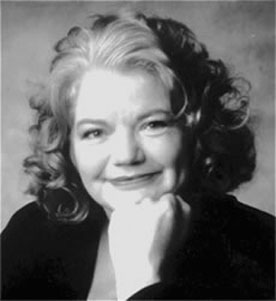
For those who don't know, Molly Ivins is another tough Texas chick, a whipsmart columnist who has been speaking truth for a long time, frequently appearing in the Texas Observer and on Alternet. She's struggling with cancer right now so I wanted to post this to make sure people saw it - and if you feel so inclined, you can support an excellent publication as she has asked, the Texas Observer. Donation page here.


The headline link starts:
Our beloved sister Molly Ivins is fighting or her life against cancer, and all we can do is try to send her even a fraction of the brillliance, joy and love she has given us for so many incomparable years.This genuis daughter of Texas turmoil has stood alone for so long as a voice of clarity, wit, common sense and plain-spoken conscience that it’s hard to know even where to start.

It's worth a read, for any smart progressive types who might now know what she's done. She's one of the good ones, folks.

PS From the LA Times today (via the Boston Globe):
Molly Ivins, the irrepressibly irreverent political humorist and syndicated columnist who skewered legislators, governors, and presidents, especially those from her beloved Texas, died yesterday at her home in Austin after a long battle with cancer. She was 62.

It goes on to say a lot more, and is worth reading.

Expected I suppose, but tragic all the same. I hope some strong Texas gals will follow the legacy of Ivins and Richards in some way, and put some rightwing nutjobs in their place. Texas of all places could use them.

Tuesday, January 30, 2007

Fear of the Reader

Just a quick post to link to this Salon piece, "The Readers Strike Back," by Gary Kamiya. I'll edit this post later to add my thoughts to it, but just from reading page one, I can see folks need to read it. Salon's editor-in-chief, Joan Walsh, is quoted as saying (quote pulled from within quote), "We wanted to incread our page views, reaader participation and loyalty." She's explaining why they added an open comments feature to their articles. You write something, and then you go back to look at it and see if it got attention. My initial reaction is that such an impulse shouldn't be encouraged by major media outlets - but more, again, later.

Friday, January 26, 2007

A few minor points

I was pleased to see this note in today's issue of Shelf Awareness:
Who'd have thought it? Tom Stoppard's The Coast of Utopia, which has been running at Lincoln Center since late November, has created a run on Russian Thinkers, the 1978 collection of essays by Isaiah Berlin, today's New York Times reported. One of seven titles recommended in the show's playbill, until recently the book sold about 36 copies a month nationally. It's now unavailable at New York area stores and online. Penguin has done its first reprinting in 12 years and will have more copies available in days.The other six books, which are also in some demand, are:

The Romantic Exiles by E.H. Carr
Natasha's Dance: A Cultural
History of Russia by Orlando Figes
My Past and Thoughts by Alexander Herzen
Indiana by George Sand
A Sportsman's Sketches by Ivan Turgenev
Fathers and Sons by Ivan Turgenev

I like seeing other people, like me, finding books in unusual ways. The unfortunate reality is that you cannot build marketing strategies off of this kind of reading. I'm sure publishers did not petition Stoppard or the theatre to get into this recommended reading list. And yet, the books are in demand! Hurray!

More Mailer on the NYTimes here. I saw Mailer at a William Styron tribute at the Boston Public Library last month (or so), and he's looking his age. Of course, he went on to say that the women who had spoken before him were not loud enough, and would never take over the world if they couldn't speak up, "like Hillary Clinton." He then complimented the men who spoke, whom he could here, saying that it's hard for men to speak up in this day and age. Long story short, he's still a blowhard.

And people are talking about this Finnish novel written entirely in text message speak. I'm linking to the enjoyable galleycat blog rather than the blogger's source: USA Today. No sir, I am not linking to that blandness in black and white. USA Today reminds me of bad road trips. Anyhow, this novel sounds intensely irritating, no? I love the author's name - Hannu Luntiala - and I secretly love how annoyed the publisher's managing editor must have been seeing all the grammatical errors. But I ain't reading idiot code. It's useful, but it doesn't mean it needs this kind of replication. (It doesn't help that I've heard grad students say that these abbreviations are creeping into student papers. Now that's just painful.)

I don't want my posts to become a series of links, like this blog, for example. It's fine for some, but for right now, I'd rather create more content. That blogger's obviously showing signs of a busy schedule - and I have a manuscript sitting here, to edit. That blogger's manner makes more sense... So we'll see.

Wednesday, January 17, 2007

A new year... finally

My first post of 2007. Sorry it's taken so long - a hit this new year running.

So I won't get into the horror that is Time Magazine's Person of the Year, which basically confirms all my suspicions, that have been voiced by many others in this case, that big corporate media is praising all of us in order to get our money. They made ME person of the year, then I should really get a subscription. Ridiculous. A better but still l-i-t-e (in a good way) criticism of this feeble marketing attempt was written about by Siva Vaidyanathan (of sivacracy) on msnbc, who sums it all up nicely:

Well, thank you, Time, for hyping me, overvaluing me, using me to sell my image back to me, profiling me, flattering me, and failing to pay me. As soon as I saw myself on my local newsstand, I had to buy a copy of Time... Almost every major marketing campaign these days is about empowering "you."

(and later) It’s part of a slippery slope between true democratic culture and crass commercial culture. Because we all matter equally in the polis we pretend we all might matter equally in the public square. Granting that illusory wish can be very profitable.

I like his point about this corporation illusion of participation and communication, versus the very real possibility of it that has yet to be realized. He doesn't really address my concerns, in this article at least, about legetimate authority and controlling one's content - though I like his line about "failing to pay me." The Weekly Dig made this point when the Boston Globe writers were on strike: these reporters are expected to keep blogs, which are then excerpted in the newspaper, and it's questionable whether or how they're being paid for that content.

And in the current issue of Mother Jones, Alissa Quart has a good article on "the amateur revolution." Quart introduced a term I didn't know, "pro-am," or "professional amateurs:"
The majority of the millions of amateurs out there are not far-out obsessives, but rather what is known as "professional-amateurs." These "pro-ams," as Wikipedia describes them (at least for now), exist "within any endeavor that could be called professional, such as writing, sports, computer programming, music, film, etc.," smudging the distinction between expert and novice. First identified in Charles Leadbeater and Paul Miller's 2004 essay "The Pro-Am Revolution: How enthusiasts are changing our economy and society," this new breed pursues "amateur activities to professional standards" and has redefined leisure as "not passive consumerism but active and participatory."
Ahhh. So they have a name. Much of the article involves giving interesting examples of these people - well worth a read (and I should say, unlike Time magazine, Mother Jones is well worth a subscription!). Quart doesn't come out strongly as pro or anti, but rather questions the state of things in a way I found helpful and agreeable. She points out the corporate intrusions on this amateur world - fake videos posted on YouTube by supposed amateurs who were later uncovered, Wizard-of-Oz like, and found to be PR firms and what-not.

Reading these pieces makes me feel part of a group of skeptics, not sure that there is a solid answer but not ready to run excitedly into this future where "pro-ams" are given full reign. The article quotes Ron Hogan, publishing blogger at GalleyCat (which I've quoted), who says that "capital-J journalists... possess an 'ironclad defensiveness about who gets entry into professional institutions.'" But I can't help but think he's referring to people who worked their way up, through j-school and through small publications, to get into positions of more power. Why shouldn't they expect the next crop to do the same, to prove their ability and their work ethic for that field?